
Call Now for Fast Service
(470) 458-2322
We turn the slab you already have into dense, dust-free, low-maintenance industrial concrete flooring — diamond-ground, chemically hardened, and polished to the exact sheen your warehouse, plant, or retail space needs. Southeast Commercial Services is a licensed, insured concrete polishing contractor serving commercial and industrial facilities across Atlanta.
Tell us about your floor and facility — we typically reply within the hour (Mon–Fri).
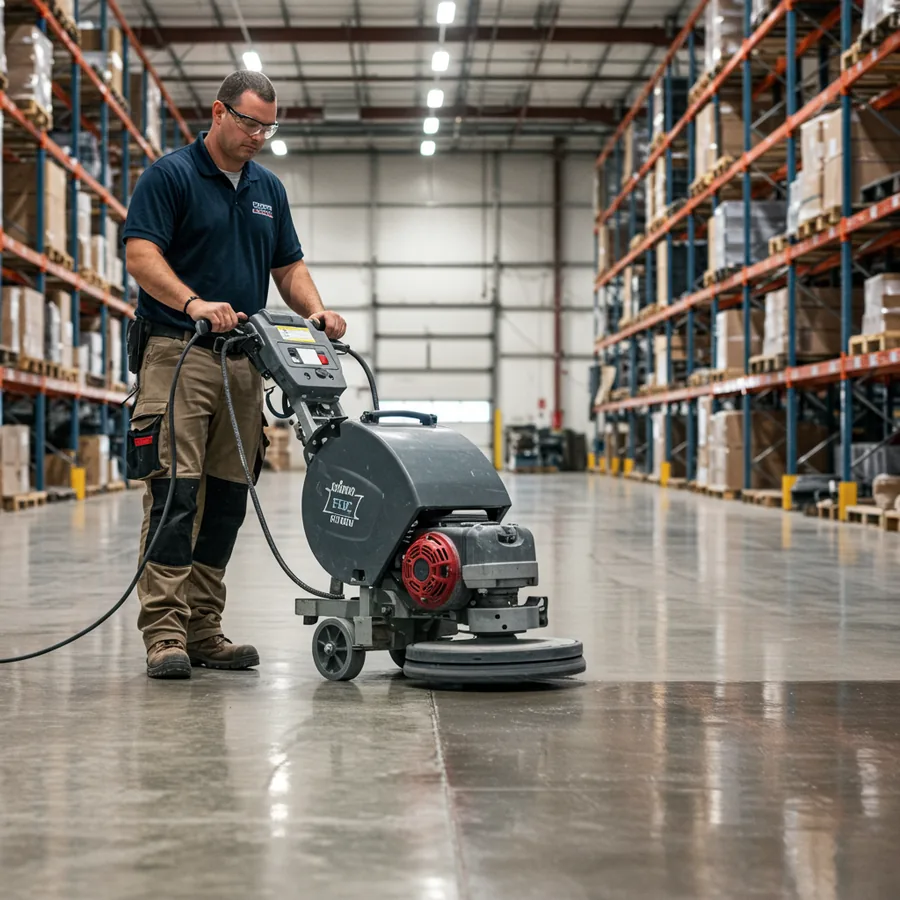
Most commercial slabs are hiding a finished floor. Polishing draws it out — hardening the concrete from the inside and refining the surface until it shrugs off forklift traffic, stops shedding dust, and cleans with a mop instead of a maintenance contract. Southeast Commercial Services reads each slab, sets a gloss and aggregate target with you, and grinds through a defined diamond progression so the finished floor is the one you specified, not the one the concrete happened to give.
For over 30 years we've delivered industrial concrete flooring and polishing across Atlanta's warehouses, showrooms, plants, and storefronts — for the facility managers, plant directors, and operations leads who answer for how a floor performs and how much it costs to keep. Polishing is one line in a full commercial concrete service and facility program, so it can be bundled with painting, epoxy flooring, or concrete repair under one contract.
Vetting a polishing contractor is a due-diligence job — a slab ground wrong or hardened poorly can't simply be re-coated. Here's what clears our name through procurement before the first diamond ever touches your floor.
Established in 1991, with 30+ years finishing concrete across commercial and industrial property in the metro.
We grind and hone through the complete metal- and resin-bonded diamond sequence — not a two-pass shortcut that dulls in a season.
Southeast Commercial Services of Georgia LLC — a registered, licensed contractor you can verify.
We select and apply the right hardener for your concrete's hardness and traffic, so the floor cures dense instead of soft and porous.
General liability and workers' comp in place; we issue a certificate naming your property on request.
Bonding gives owners and managers a layer of financial recourse most crews can't offer.
HEPA vacuum-shrouded grinders keep silica dust contained, so we can polish in occupied buildings without shutting the operation down.
We don't polish residential garages. Every crew, machine, and schedule is built for occupied business facilities.
Measured square footage, named gloss and aggregate targets, and defined repair scope so you can compare bidders line for line.
A single project lead owns your job start to finish — no chasing a rotating cast of subs.
A polished floor is specified, not guessed at. Three choices define how yours looks — how bright it is, how much stone shows, and whether it carries color. We set all three with you before we grind.
How far we carry the diamond progression sets the reflectivity. We can finish to whatever the space needs:
How deep we grind decides how much stone the surface reveals — from smooth to terrazzo-like:
Color and pattern go in during polishing, penetrating the concrete instead of sitting on top:
When a polishing job disappoints, it rarely disappoints on day one. It shows up in the things a plant director actually tracks — a surface that dulls in a season because the grit progression was cut short, a slab that stays soft and dusty because the densifier was skipped or under-applied, hazing and swirl marks from a crew rushing the hone, or grinding dust that drifted into product because containment was an afterthought. Those failures land on your maintenance budget, not the polisher's.
We built our polishing operation to take those risks off your plate. That means the full diamond progression, a densifier matched to your concrete, dust-controlled equipment in occupied space, and a finished sheen and aggregate you signed off on before we started. You get one contract, one accountable team, and a floor whose whole appeal is that it costs almost nothing to keep looking right for years.
Work is phased and dust-controlled so aisles, sales floors, and lines stay usable and come back on a schedule you can plan around.
Full grit progression plus a densifier matched to your slab — the difference between a floor that stays sharp and one that dulls fast.
No rotating subs. One project lead runs your job from walkthrough to final buff and stands behind the finished floor.
Beyond a standard polish, we handle the repair, color, and grip work a real facility floor often needs on the same visit.
From a single showroom floor to a full distribution campus, here's the range of commercial and industrial facilities Southeast polishes across metro Atlanta.
Industrial concrete polishing in Atlanta is built for floors that take a beating — warehouse aisles under constant forklift and pallet-jack traffic, manufacturing and processing bays, and distribution-center slabs that have to stay bright, dust-free, and flat shift after shift. We densify the concrete so it stops shedding silica dust onto product and racking, then grind the full diamond progression so the wearing surface stays hard and abrasion-resistant for years. The result is an industrial floor that cleans with a sweeper instead of a maintenance contract and holds crisp aisle and safety striping.
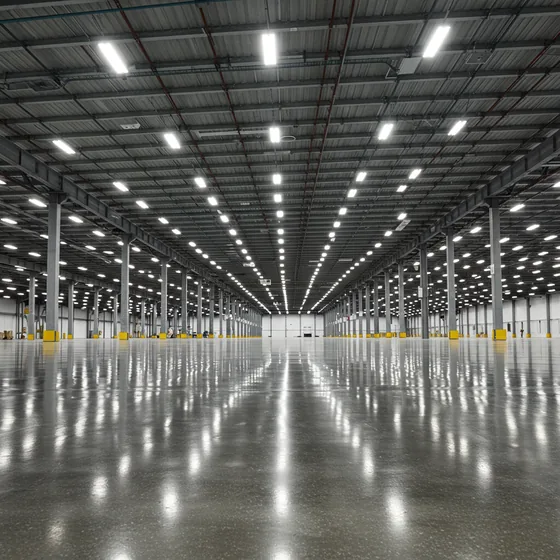
Densified, dust-free floors hard enough for constant forklift and pallet-jack traffic — bright, easy to sweep, and ready to hold crisp aisle and safety striping.
Warehouse Facilities →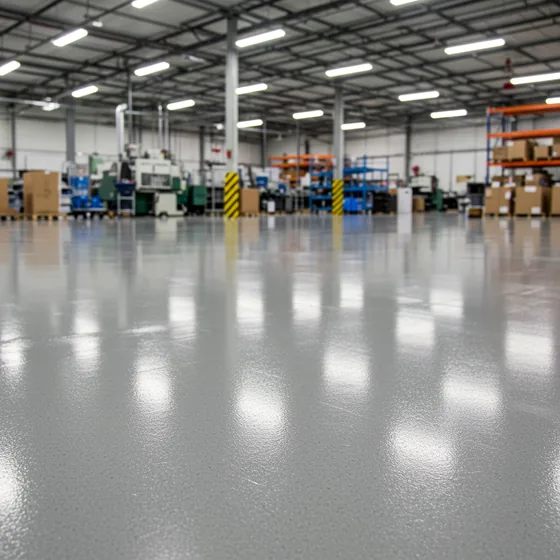
A hard, abrasion-resistant surface for production floors and processing areas — polished to reflect light onto the line and cut the dust that settles on equipment.
Get a Plant Quote →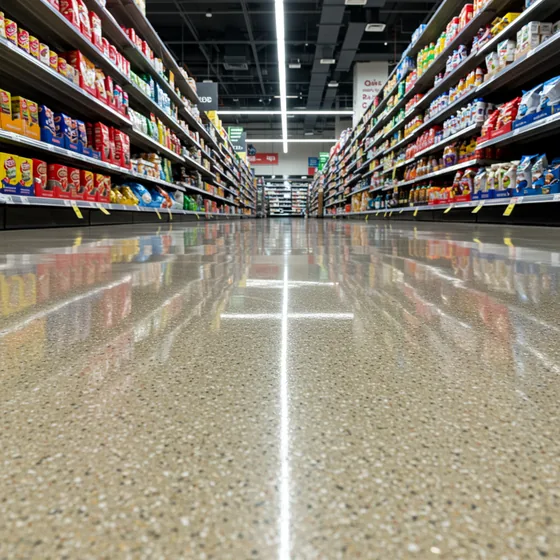
Bright, low-maintenance sales floors that take cart and foot traffic all day, reflect overhead lighting, and skip the cost and downtime of waxing and stripping.
Get a Retail Quote →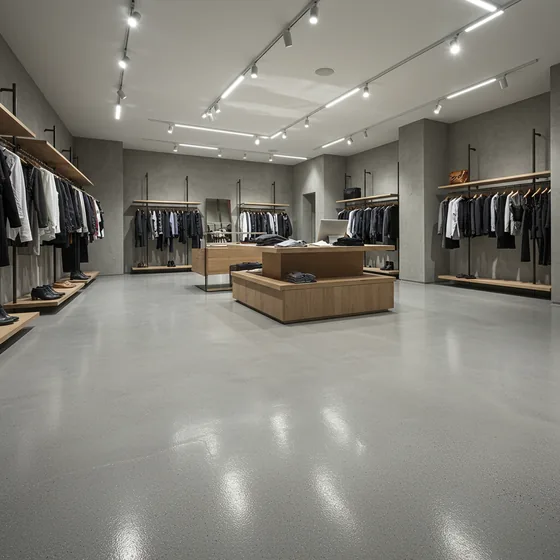
Dyed, stained, and high-gloss finishes that read as a design feature — a branded floor that photographs well and still wears like industrial concrete.
Get a Showroom Quote →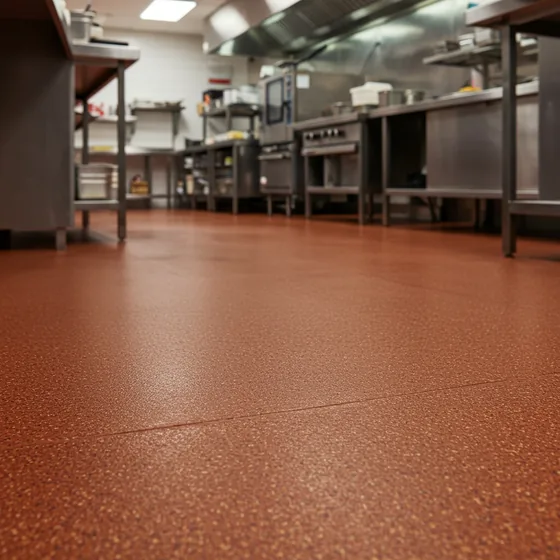
A sealed, non-porous, easy-to-clean floor for dining rooms and back-of-house — finished with a slip-resistant treatment where the kitchen needs the grip.
Restaurant Facilities →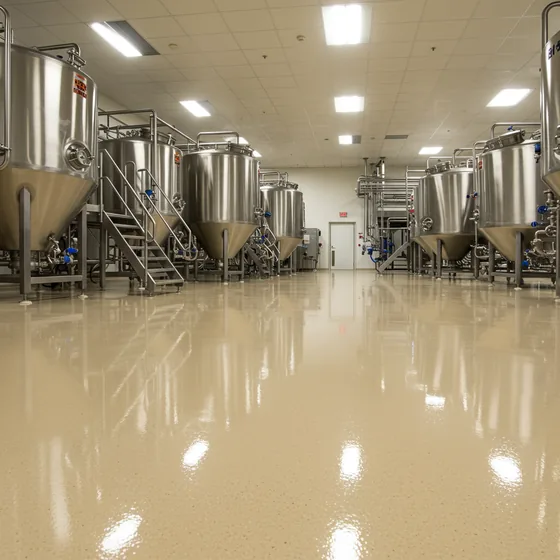
A dense, dust-free surface for production and packaging areas that keeps particles off product and cleans down fast — with coating options where sanitary spec calls for them.
Sanitary Flooring →Bright showroom floors that make vehicles pop, plus densified service-bay concrete that resists tire marks, oil, and constant traffic without waxing.
Hard, light-reflecting hangar floors that stand up to aircraft loads, tugs, and jack points — sealed against fluids and easy to keep spotless.
Densified, dust-proofed concrete for interior parking, drive aisles, and high-traffic transition zones that see heavy vehicle and cart wear.
Seamless, low-maintenance floors for corridors, labs, and common areas where sanitation, durability, and minimal downtime all matter.
Polished lobbies, corridors, and open-plan floors that look intentional, reflect light, and hold up to daily foot traffic with almost no upkeep.
Diamond grinding, joint filling, crack repair, and re-polishing of existing worn or coated slabs — the prep and restoration that renews a tired floor.
Polishing is a durability and cost decision as much as an appearance one. Here's what a facility manager gets when the contractor is Southeast.
A polished slab needs no waxing, stripping, or recoating — just sweeping and periodic burnishing — so it costs far less to maintain over its life than a coated floor.
We drive a densifier deep into the concrete and grind the full diamond progression, so the wearing surface stays dense, sharp, and dust-free for years.
Multi-million-dollar insured, bonded, and licensed in Georgia, polishing to a named gloss and aggregate target you signed off on.
30+ years of Atlanta commercial work — and polishing bundles cleanly with painting, epoxy flooring, and repairs under one accountable team.
A repeatable, seven-step process that turns polishing from an open-ended risk into a scheduled, documented job you can plan production around.
We check hardness, moisture, and existing coatings or wear, and confirm the gloss and aggregate look your slab can realistically deliver.
Cracks, spalls, pop-outs, and control joints are patched and joint-filled so the finished floor is sound and reads clean under polish.
Metal-bonded diamonds open the surface and remove old coatings or damage, cutting to the aggregate exposure you selected.
A chemical densifier is applied and penetrates the concrete, reacting to fill and harden the surface into a dense, dust-free floor.
Resin-bonded diamonds step up through finer grits, honing the floor toward the target sheen — matte, semi-gloss, or high gloss.
Where color is specified, penetrating dyes or stains go in during polishing and lock into the densified surface.
We apply a guard, burnish to final sheen, add slip resistance where needed, and hand the area back on the schedule we set with you.
A real polishing spec is a document, not a dollar figure. When you compare bids, these are the six things that separate a floor that stays sharp for years from one that dulls in a season.
Before grinding, we assess the concrete's hardness, moisture, and surface history. A soft or damp slab polishes and hardens differently than a sound one, and a floor we haven't read is a floor we can't guarantee. Knowing what we're working with is what lets us commit to a sheen and aggregate result rather than hoping for one.
Gloss and durability come from grinding through the whole sequence — coarse metal-bonded diamonds to open and flatten, then successively finer resin-bonded diamonds to hone. Crews that skip steps to save time leave a floor that looks fine at handoff and dulls fast under traffic. The number of steps, not the machine, is where a polished floor is won.
A densifier is what turns polishing from a surface shine into a hardened floor. Driven into the concrete at the right stage and coverage, it reacts to fill the pores and lock the surface tight, so the floor stops shedding dust and resists abrasion. Under-applying it — or skipping it — is why a "polished" slab can still powder and wear.
Control joints, cracks, and spalls are filled and repaired before final polishing. Left open, they collect debris, chip at the edges under wheel traffic, and telegraph straight through the finished look. A defined repair and joint-filling scope means the floor under your polish is actually sound and comfortable to run equipment across.
We name the target gloss level, the aggregate exposure, and any dye or stain for each area up front. Writing it down holds the finished floor to a defined standard you can inspect against — not a vague promise of "shiny." It also keeps light reflectivity, glare, and slip characteristics tuned to how each space is actually used.
We map the work to your calendar — which areas get polished in what order, what happens off-shift, and when each zone returns to traffic — and we run HEPA vacuum-shrouded grinders so silica dust stays contained. A phased, dust-controlled plan is the difference between a floor that quietly happens around your operation and one that shuts a space down.
Most of the floors we polish can't simply shut down for the job — product still moves, registers still ring, and staff still report. So we plan the work around your operation rather than through it. We sequence it area by area, grinding, densifying, and polishing one zone back to traffic before moving to the next, so the parts of the floor you need stay usable throughout.
Our office hours run Monday through Friday, and we phase the work to fit the rhythm of your facility — concentrating the loud grinding steps in your lowest-traffic windows and keeping active aisles, exits, and equipment clear. Because our grinders run HEPA vacuum-shrouded dust control, we contain the silica dust that raw grinding throws off, so the operations still running around us aren't breathing it or wiping it off inventory.
Every crew follows OSHA practices for silica exposure, containment, and jobsite safety, so the work stays safe for your people as well as ours. The goal is simple: you get a floor engineered to last and stay cheap to own, and your operation barely loses a shift getting it.
From two Atlanta-area offices, Southeast Commercial Services polishes commercial and industrial floors throughout Fulton, DeKalb, Gwinnett, Cobb, and Cherokee counties — from Midtown showrooms to Gwinnett distribution centers.
Planning a floor? Tell us the facility type, rough square footage, and your timing, and we'll schedule a walkthrough and return a written scope you can act on.
Working from offices in Atlanta and Decatur, our crews reach commercial and industrial sites across the region's major corridors and surrounding counties.
We follow the metro's freight and industrial arteries — the I-75, I-285, and I-85 corridors — to reach warehouses, plants, and business parks throughout the region. Coverage spans Fulton, Cobb, Gwinnett, DeKalb, and Cherokee counties, from intown showrooms and restaurants to the distribution belts on the perimeter.
If your building sits inside the greater Atlanta area, we can most likely polish it. Not sure whether you're in range? Call (470) 458-2322 and we'll confirm coverage and set a walkthrough.
Every facility type carries its own traffic, look, and downtime demands. These are the commercial and industrial floors we're built to finish.
Densified, dust-free floors hard enough for constant forklift and cart traffic.
Abrasion-resistant production floors polished to reflect light and shed dust.
Bright, wax-free sales floors that take cart traffic and skip stripping cycles.
Dyed, stained, and high-gloss finishes that read as a branded design feature.
Sealed, easy-clean floors with slip-resistant treatment where it's needed.
Showroom-bright floors and densified service bays sealed against fluids.
Hard, light-reflecting hangar floors engineered for aircraft and tug loads.
Dust-proofed interior parking and high-traffic transition-zone concrete.
A polished floor is an asset your operation runs on every shift — and one whose whole value is how little it costs to keep. We stand behind the finish and the process that creates it.
Our labor is warranted against installation defects — hazing, swirl marks, uneven sheen, or premature dulling that traces back to how the floor was ground and hardened rather than how it's used.
We use professional-grade densifiers and guards installed to specification — applied the way the material requires so the hardened, sealed surface performs as intended.
We'll tell you honestly what a given finish should deliver on your slab, traffic, and maintenance — so your budget is planned on real service life and a simple upkeep routine, not a sales number.
Commercial concrete polishing is a mechanical, multi-step process that refines a bare concrete slab into a hard, dense, low-maintenance finished floor — grinding the surface with progressively finer diamonds, driving a chemical densifier into the concrete to harden it, and polishing it to a chosen sheen from matte to high gloss. In Atlanta it's done by Southeast Commercial Services, a licensed, insured concrete polishing contractor working commercial and industrial only.
Unlike a topical coating that sits on the surface, polishing changes the concrete itself, so there is no film to peel or delaminate. The result is a dust-free, easy-to-clean industrial concrete floor with lower lifecycle cost than most coatings — and, because polishing reflects more light, it can trim the lighting load in warehouses and retail spaces. Southeast has delivered Atlanta commercial concrete services and polished floors for over 30 years and phases every job to keep your operation running.
Straight answers to what Atlanta facility managers and plant directors ask before signing a concrete polishing contractor.
Polished concrete is your existing slab refined into the finished floor — ground and honed with progressively finer diamonds and chemically hardened with a densifier, so there is no separate coating layer to peel or delaminate. An epoxy floor adds a resin film on top of the concrete. Polished concrete tends to last longer with less maintenance and lower lifecycle cost, while a coating is the better answer when you need a specific color, heavy chemical resistance, or a seamless sanitary surface. We install both and will tell you honestly which fits your slab and how the floor is used.
Yes — sheen is a specification, not an accident. By controlling how far we take the diamond grit progression, we can finish a floor anywhere from a low-glare matte or satin to a semi-gloss or a bright, mirror-like high gloss. Higher gloss reflects more light, which can cut how much artificial lighting a space needs, while a lower sheen hides traffic patterns and dust. We set the target gloss level with you before we start based on how the floor looks and works for your operation.
Aggregate exposure is how much stone shows through the surface after grinding. A cream finish removes only the top layer for a smooth, near-uniform look. A salt-and-pepper finish opens the surface just enough to reveal the fine sand and small stone. A full-aggregate finish grinds deeper to expose the larger stone for a terrazzo-like appearance. We match the exposure to the look you want and to what your slab will actually reveal, since the finish depends on how the concrete was originally placed.
Yes. We apply penetrating dyes and chemical stains during the polishing process to add color, from subtle earth tones to bold branded shades, and we can layer decorative saw cuts or borders. Because the color penetrates into the densified concrete rather than sitting on top as a film, it holds up to foot and cart traffic far better than a surface coating. Dyed and stained polished concrete is a common choice for showrooms, storefronts, restaurants, and lobbies.
A polished floor is not inherently slippery — a dense, honed surface can carry good traction, and where a facility needs more grip we add a slip-resistant treatment to raise the coefficient of friction for safety and OSHA considerations. On durability, densified polished concrete is extremely hard and abrasion-resistant, which is exactly why it is used in high-traffic warehouses and distribution centers where forklifts and pallet jacks run all day. The hardening and polishing make the wearing surface tougher than bare concrete, not softer.
Yes — dust-proofing is one of the main reasons facilities polish. Bare concrete constantly sheds fine dust as its surface wears, which settles on product, racking, and equipment. Densifying fills and hardens the surface so it stops shedding, and polishing seals it into a dense, non-porous floor that is easy to sweep and scrub and does not powder under traffic. That means cleaner air, cleaner inventory, and far less daily upkeep than an unfinished slab.
Commercial concrete polishing is priced per square foot. As an industry benchmark, the Concrete Network puts basic polished concrete at roughly $3 to $7 per square foot and multi-step or dyed finishes with densifiers at about $8 to $12 per square foot, with highly decorative work running higher (concretenetwork.com). Those are general industry averages, not a Southeast Commercial Services quote — your actual price depends on the condition of the existing slab, how much repair and joint filling it needs, the aggregate exposure and number of grinding steps, whether you're adding dye or stain, the total square footage, and site access. A large, sound warehouse slab polished to a basic finish costs less per foot than a small, damaged floor taken to a full-aggregate high gloss with color. Rather than quote a number that won't fit your floor, we walk the site, measure it, and return a written per-square-foot scope you can compare line for line against other bids. Over its life, polishing usually costs less to own than a coated floor because it needs no waxing, stripping, or recoating.
Because polishing works the existing slab rather than pouring or curing a new coating, there's no long cure or downtime waiting on a film to set — a polished area is typically ready for foot traffic almost immediately and for full equipment traffic very shortly after the final steps. Overall project length depends on the square footage, how much repair the slab needs, and the finish you've specified. We phase the work area by area and hand each zone back to traffic before moving to the next, so your operation keeps running and you get a clear return-to-service schedule up front rather than an open-ended shutdown.
We assess and test the slab for hardness, moisture, and existing coatings; repair cracks, spalls, and control joints; coarse-grind with metal-bonded diamonds to open the surface and reach the aggregate exposure you chose; apply a chemical densifier that penetrates and hardens the concrete; then progressively polish with finer resin-bonded diamonds up to your target sheen. Where color is specified, penetrating dye or stain goes in during polishing, and we finish by sealing, burnishing to final gloss, and adding slip resistance where the space needs it. Every step is defined in a written scope so the floor you get is the one you signed off on.
Beyond our core Atlanta service area, we polish concrete floors for the industrial and logistics corridors ringing metro Atlanta. Explore our concrete polishing by city.
Polished concrete for the cold-storage, food-logistics, and big-box distribution floors clustered around the I-75 interchange — low-dust, forklift-durable slabs built for high-traffic warehouse and freezer space.
Polished concrete for the food-production, meal-kit, and distribution facilities along the I-85 corridor — sanitary, wash-down-ready floors that take daily sanitation and processing traffic.
Tell us the facility type, rough square footage, and your timing. A Southeast Commercial Services team member will follow up to schedule a walkthrough — typically within the hour, Monday–Friday.