
Call Now for Fast Service
(470) 458-2322
We clean the ductwork that keeps plants running — process exhaust, dust collection, fume extraction, make-up air, and high-volume industrial HVAC — by source removal, scheduled around your production. Southeast Commercial Services is a licensed, insured contractor working commercial and industrial only.
Tell us about your systems and particulate load — we typically reply within the hour (Mon–Fri).
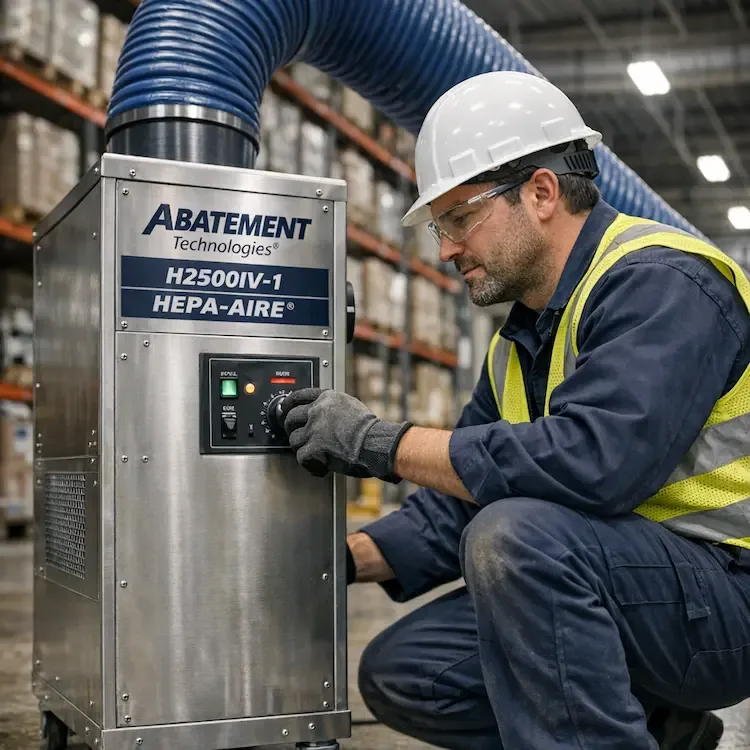
When ductwork carries welding smoke, grinding dust, oil mist, or high-temperature process exhaust, it loads far faster and far heavier than the tidy office systems most duct companies are built for. Deposits restrict airflow, drop capture velocity at the hood, and — where the dust is combustible — turn a maintenance item into a fire and explosion exposure. Southeast Commercial Services cleans those systems for the plants that depend on them.
For over 30 years we've served Atlanta's manufacturing plants, warehouses, factories, and fabrication shops — the plant engineers, EHS managers, and operations directors who answer for uptime, air quality, and compliance. Industrial duct cleaning is one line in a full facility program, so it can be scheduled alongside HVAC service and other maintenance under one accountable team. For lighter office and retail HVAC, see our commercial duct cleaning service.
Industrial duct cleaning is the source removal of accumulated dust, grease, metal fines, and process residue from the ductwork of manufacturing plants, warehouses, and factories — process exhaust runs, dust-collection lines, industrial ventilation and fume/mist extractors, make-up air units, and high-volume industrial HVAC. In Metro Atlanta it's performed by Southeast Commercial Services, a licensed, insured contractor working commercial and industrial only.
Unlike office or standard HVAC duct cleaning, industrial work deals with heavy particulate loads, large-diameter and rooftop ductwork, and combustible-dust and OSHA/NFPA considerations. Crews use high-CFM HEPA extraction, mechanical agitation, and containment to pull deposits out rather than push them downstream — scheduled around production so the plant keeps running while the systems get cleaned.
In an industrial environment, dirty exhaust and collection ducts aren't a cosmetic issue. They quietly erode safety, air quality, equipment life, compliance standing, and the throughput the whole operation is measured on.
Where a process throws off combustible fines — metal, wood, plastic, grain, or chemical dust — layered accumulation inside ductwork becomes fuel. A single ignition source can carry through a loaded run.
When ductwork loads, capture velocity at the hood drops and contaminants that should be pulled away drift back into the breathing zone. That is a worker-exposure and IAQ problem the plant carries.
Restricted airflow forces fans and collectors to work harder, drives energy cost up, and shortens motor and filter life — while a missing housekeeping record leaves you exposed on inspection.
Bringing a contractor into a running plant is a due-diligence decision. Here's what clears our name before we ever open an access door on your system.
We clean to recognized air-systems cleaning standards — source removal, not fogging or masking — on industrial-scale ductwork.
Established in 1991, with 30+ years serving commercial and industrial facilities across the metro.
Southeast Commercial Services of Georgia LLC — a registered, licensed contractor you can verify.
General liability and workers' comp in place; we issue a certificate of insurance naming your facility on request.
High-CFM negative-air machines and agitation tooling built for large-diameter, heavy-deposit ductwork.
Collected material is captured through HEPA filtration so fine particulate isn't re-released into your plant.
We pull deposits out of the system rather than dislodging them to settle somewhere else downstream.
Crews follow OSHA confined-space, lockout/tagout, and fall-protection practices for plant conditions.
We clean with NFPA 652/654 housekeeping intent in mind, using grounded, appropriately rated methods.
Written before/after records for your files — and we work commercial and industrial exclusively, never residential.
A repeatable, six-step method that turns a heavy-particulate cleaning into a controlled, documented job planned around your production — not a crew improvising inside a live plant.
We walk the system, open inspection points, gauge deposit thickness, and check airflow and static pressure to map where the loading actually is before scoping a plan.
We isolate the run, establish negative-pressure containment, and coordinate lockout/tagout with your team so fans, dampers, and equipment stay safely de-energized.
Heavy, packed deposits in large-diameter and process ductwork are broken loose with brushes, whips, and air-lance tooling sized for industrial runs.
Dislodged material is pulled out under high-volume negative air and captured through HEPA filtration, so debris leaves the system instead of settling downstream.
We service the collectors, hoppers, hoods, and exhaust branches that feed the trunk lines — restoring capture velocity across the whole system, not just the main.
We re-inspect, confirm restored airflow, close access points, and hand you a written record of what was serviced, how, and its before/after condition.
Industrial ventilation is a family of very different systems, each with its own loading and access challenges. We clean the full range that a manufacturing plant, warehouse, or factory runs — process exhaust, dust collection, fume extraction, make-up air, and high-volume HVAC.
High-temperature and high-residue exhaust from ovens, curing lines, coating operations, and production processes — where deposits build fast and restrict draw.
Collector housings, hoppers, pickup branches, and large-diameter trunk lines — the systems whose airflow directly controls capture at the source.
Fume arms, downdraft tables, and extraction ductwork loaded with weld smoke and metal fines that cut capture and recirculate contaminants when clogged.
MAU intakes and supply ductwork that replace exhausted air — kept clean so balanced pressure and capture across the plant hold up.
Large-volume heating and ventilation trunks in high-bay and production spaces, where run length and diameter demand industrial-scale extraction.
Bake-oven, kiln, and furnace exhaust runs carrying grease, resin, or thermal residue that layer heavily and need mechanical removal to clear.
In facilities that generate combustible dust, unmaintained ductwork isn't just a housekeeping lapse — it's stored fuel. The intent behind NFPA 652 and 654 and OSHA's housekeeping requirements is to keep accumulation from reaching a level where an ignition can propagate. Regular source-removal cleaning of exhaust and collection systems is a direct way plants act on that intent, and it's the physical work we perform.
To be clear about scope: we are a cleaning contractor, not a certified dust-hazard analysis firm. We don't issue DHA reports or engineering determinations. What we do is remove the accumulation your process leaves behind, clean with grounded and appropriately rated methods where combustible material is present, and hand you documentation of exactly what was serviced — a record your EHS team, insurer, and the authority having jurisdiction can rely on to show the housekeeping was done.
Source removal of layered deposits so combustible material doesn't build to a hazardous level inside your runs.
Grounded, appropriately rated equipment and containment where combustible dust is present — awareness, not certified inspection.
Written before/after records for insurer requirements, AHJ inquiries, and your preventive-maintenance file.
From production plants to critical-environment facilities, these are the Atlanta operations whose exhaust, collection, and HVAC ductwork we're built to clean.
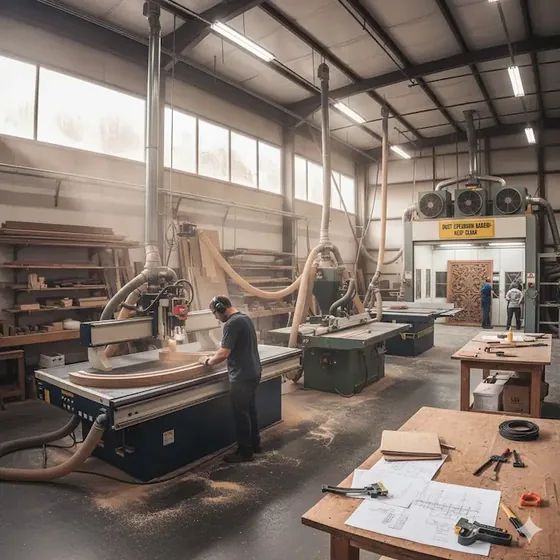

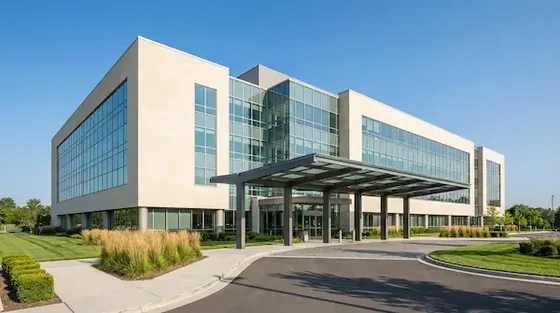
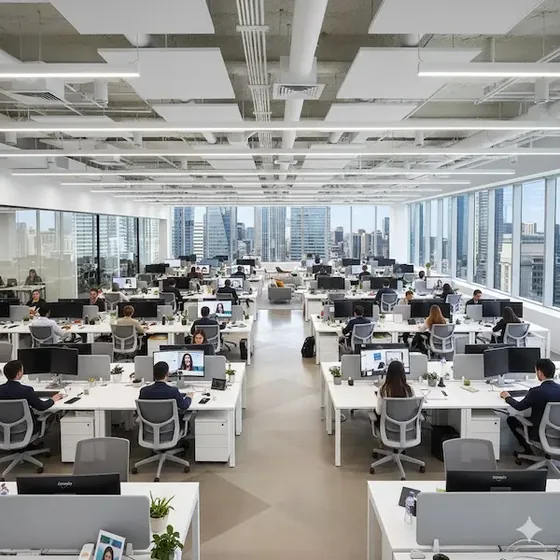



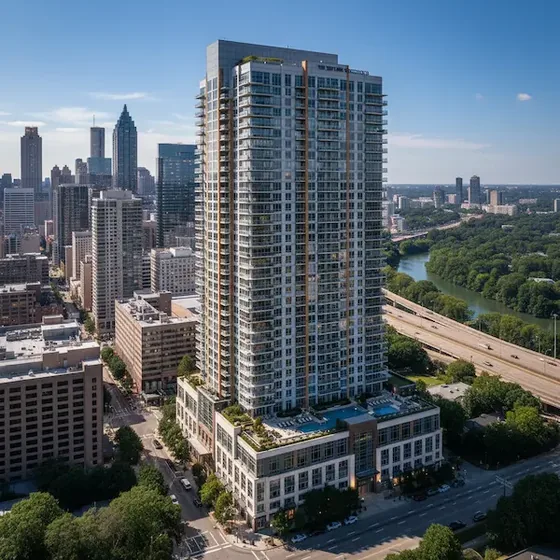
A residential or light-commercial duct outfit is set up for tidy sheet-metal supply and return runs a few inches across. Industrial ductwork is a different animal — large-diameter trunks, rooftop and high-bay runs, packed deposits of metal fines, grease, and process residue, and confined interiors that carry real access and safety demands.
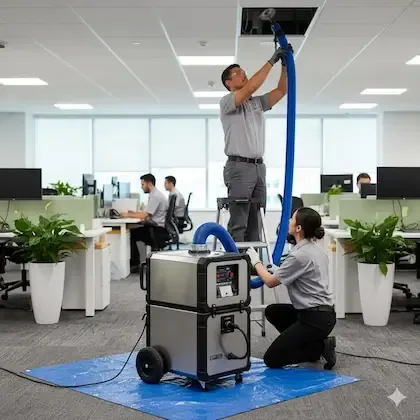
Under-powered vacuums simply can't move that load, and dislodging heavy deposits without high-CFM capture just relocates the problem downstream. Our crews and equipment are scaled for the job — industrial negative-air machines, agitation tooling for large runs, HEPA capture, and OSHA confined-space and lockout/tagout discipline — so the material actually leaves your system.
A real industrial proposal is an engineered plan, not a flat number. When you compare vendors, these are the six things that separate a professional scope from a crew with a shop vac.
We identify every run in scope — process exhaust, collection branches, MAU, HVAC — open inspection points, and record deposit depth and airflow readings. That survey is what lets you compare bids on the same systems instead of guessing whose "duct cleaning" covers what.
The scope states how each run is reached — rooftop, high-bay, or confined interior — and how the crew stays safe: lockout/tagout coordination, confined-space entry procedure, fall protection, and lift or rigging needs. On a live plant, the access plan is as important as the cleaning itself.
We name the method for each system: mechanical agitation tooling, air-lance, brush-and-whip, and the negative-air capacity applied. Matching method to deposit type — metal fines behave differently than grease or resin — is what actually clears a heavily loaded run.
The scope details negative-pressure containment, HEPA filtration on the extraction, and how collected material is contained and disposed of. Where combustible dust is present, it also covers grounding and appropriately rated equipment so the cleaning itself introduces no new hazard.
We map the work to your production calendar — which branches are cleaned in what order, which shift or maintenance window each phase runs in, and how runs are isolated so the rest of the system keeps operating. Phasing is the difference between cleaning around your throughput and stopping it.
The scope defines how the job closes: re-inspection, restored-airflow confirmation, access-point closeout, and a written report of systems serviced with before/after condition. That documentation is your proof of housekeeping for insurers, the AHJ, and your own PM records.
The plants we service can't hand us the building and walk away — lines still run, orders still ship, and downtime is measured in real dollars. So we plan the cleaning around your operation rather than through it. We isolate and clean one run at a time, sequencing branches so the rest of the system stays live and the parts of the plant you need keep producing.
Our office hours run Monday through Friday, and we schedule the physical work to fit your rhythm — scheduled maintenance windows, off-shifts, and weekends where that's what keeps throughput intact. Every run is locked out and tagged out in coordination with your team before a crew enters it, and containment keeps dislodged material out of your production environment while the work is underway.
Crews follow OSHA confined-space, fall-protection, and lockout/tagout practice throughout, so the job stays safe for your people as well as ours. The goal is straightforward: cleaner, better-flowing ductwork and a documented housekeeping record — with your operation barely noticing the crew was on site.
From two Atlanta-area offices, Southeast Commercial Services cleans industrial ductwork throughout Fulton, DeKalb, Gwinnett, Cobb, and Cherokee counties — from intown production facilities to the manufacturing and distribution belts on the perimeter.
Planning a cleaning? Tell us the system types, your particulate load, and your timing, and we'll schedule a site assessment and return a written scope you can act on.
Working from offices in Atlanta and Decatur, our crews reach industrial and heavy-facility sites across the region's major corridors and surrounding counties.
We follow the metro's freight and manufacturing arteries — the I-75, I-285, and I-85 corridors — to reach plants, fabrication shops, and distribution facilities throughout the region. Coverage spans Fulton, Cobb, Gwinnett, DeKalb, and Cherokee counties, from intown production sites to the industrial parks on the perimeter.
If your facility sits inside the greater Atlanta area, we can most likely assess it. Not sure whether you're in range? Call (470) 458-2322 and we'll confirm coverage and set a site assessment.
Every facility type carries its own deposits, access, and scheduling demands. These are the industrial and heavy environments our crews are built for.
Process exhaust, HVAC, and general ductwork in active production plants.
Weld-fume and grinding-dust extraction loaded with metal fines and residue.
High-bay HVAC and make-up air across large warehouse and distribution footprints.
Process exhaust and hygiene-sensitive ductwork where residue and air quality both matter.
Critical-environment supply and exhaust where particulate control is non-negotiable.
High-volume cooling ductwork kept clear to protect airflow and equipment.
Heavy dust-collection systems with combustible-dust housekeeping demands.
Municipal, military, and institutional facilities cleaned to spec and documented.
An industrial cleaning is a safety, compliance, and uptime decision as much as a maintenance one. We back the work and document it so it holds up under scrutiny.
If a serviced run doesn't meet the condition we agreed on in the scope, we come back and make it right. Our guarantee is on the cleaning we performed, not on how fast your process reloads it.
Every job closes with a written record — systems serviced, methods used, and before/after condition — so your housekeeping is provable to insurers, the AHJ, and your own audits.
We'll tell you straight how fast your particulate load will rebuild and recommend a realistic cleaning interval — so your maintenance budget is planned on reality, not a sales cycle.
Straight answers to what Atlanta plant and EHS managers ask before scheduling an industrial cleaning.
It depends on the particulate load your process generates, not the calendar. A high-output plant running welding, grinding, cutting, or heavy dust may need process exhaust and collection ductwork serviced two to four times a year, while cleaner assembly or packaging lines may run annually. We assess deposit thickness and airflow at your site and recommend an interval built around your actual loading rather than a generic schedule.
Yes. Where a process generates combustible dust — wood, grain, metal, plastic, or chemical fines — we clean with an awareness of NFPA 652 and 654 housekeeping intent and OSHA requirements, using grounded, appropriately rated equipment and source-removal methods that limit airborne accumulation. We are not a certified dust-hazard analysis firm; we perform the physical cleaning and document what we removed so your safety and compliance team has a maintenance record.
Rarely for long. We plan the work around your production calendar — sequencing branches, working scheduled maintenance windows, off-shifts, or weekends, and isolating one run at a time so the rest of the system keeps operating. Before we mobilize we agree on a lockout/tagout and phasing plan so the cleaning happens around your throughput instead of stopping it.
Yes. Dust-collection systems are core industrial work for us — collector housings, hoppers, branch pickups, and the large-diameter trunk lines feeding them. Loaded collection ductwork chokes airflow and shifts capture velocity, which is why it is often the first thing we service in a fabrication or process plant.
You receive a written record of the systems and runs serviced, before-and-after condition notes, access points opened, and the cleaning methods used. That documentation supports insurer requirements, AHJ inquiries, and internal preventive-maintenance files — a paper trail that shows the housekeeping was actually performed and to what extent.
Standard HVAC duct cleaning handles the sheet-metal supply and return runs that heat and cool a space. Industrial ventilation cleaning deals with process-driven systems — exhaust, dust collection, and fume extraction — that carry heavy, sometimes combustible deposits at higher volumes through larger-diameter, often rooftop or high-bay ductwork. The load, the access, and the safety demands are all heavier, which is why industrial work calls for high-CFM extraction, mechanical agitation, and OSHA confined-space and lockout/tagout practice rather than a light-duty vacuum.
Price tracks the scope, not a flat rate. The main drivers are the number and type of systems in scope (process exhaust, dust collection, MAU, HVAC), the diameter and total footage of ductwork, how heavily it's loaded, access difficulty — rooftop, high-bay, or confined-space runs take more rigging and time — the deposit type, and any combustible-dust handling required. We survey the system, map the loading, and return a written scope so you can compare bids on the same systems instead of an unqualified number.
Yes. Industrial systems mean rooftop trunk lines, high-bay runs, and confined interiors that residential and light-commercial crews are not built for. Our teams follow OSHA confined-space and fall-protection practices, use lift and rigging access where needed, and are equipped for the large-diameter, heavy-deposit conditions a plant environment demands. For lighter office HVAC, see our commercial duct cleaning service.
Tell us your system types, particulate load, and timing. A Southeast Commercial Services team member will follow up to schedule a site assessment — typically within the hour, Monday–Friday.