
Call Now for Fast Service
(470) 458-2322
We coat the floors your operation runs on — warehouses, plants, kitchens, garages, and hangars — in epoxy and resinous systems engineered to take forklifts, chemicals, and wash-down. Southeast Commercial Services is a licensed, insured commercial and industrial epoxy flooring contractor — no residential.
Tell us about your floor and facility — we typically reply within the hour (Mon–Fri).
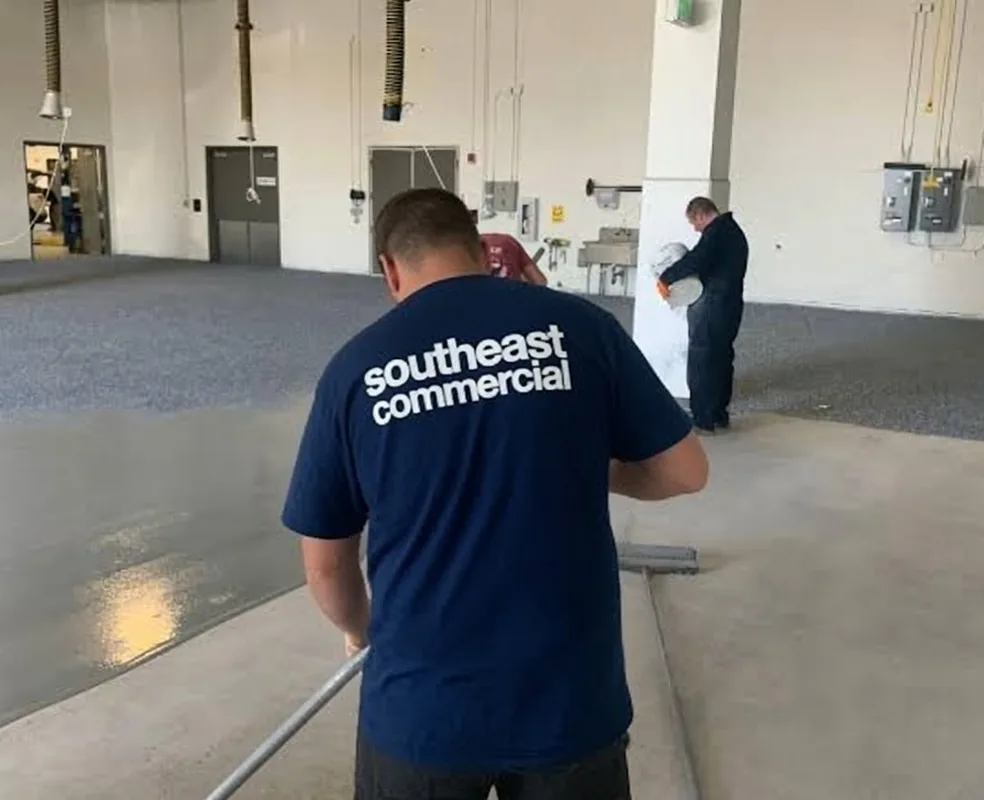
A resinous floor is a working surface, not a finish coat — it has to carry forklift traffic, shrug off chemical spills, and stay sanitary through years of wash-down. Southeast Commercial Services specs each system to the substrate and the loads it lives with, mechanically preps the slab, and installs to the manufacturer's data sheet so the floor performs as long as it should.
For over 30 years we've coated Atlanta's warehouses, plants, kitchens, and garages for the facility managers, plant directors, and operations leads who answer for how those floors hold up and how fast they come back online. Flooring is one line in a full commercial facility program — so a floor install can be bundled with painting, concrete polishing, or repairs under one contract.
Commercial epoxy flooring is a seamless, resinous floor coating — epoxy, polyaspartic, urethane, or urethane-cement — installed over a mechanically prepped concrete slab to give warehouse, industrial, and commercial floors a hard, chemical-resistant, easy-to-clean surface that survives forklifts, spills, and wash-down. In Metro Atlanta it's installed by Southeast Commercial Services, a licensed, insured commercial and industrial epoxy floor coating contractor — no residential garages.
Unlike a store-bought garage kit, a real industrial floor coating starts with diamond-grinding or shot-blasting the concrete and moisture-testing the slab, then building the right resin system for the loads, chemicals, and temperatures that floor actually takes — warehouse epoxy, food-grade sanitary flooring, or chemical-resistant plant coatings. Southeast has coated Atlanta facilities for over 30 years and schedules installs to return each area to service as fast as the system allows.
Vetting a flooring contractor for a facility floor is a due-diligence job — a failed coating means downtime and a re-do. Here's what clears our name through procurement before a system is ever specified.
Established in 1991, with 30+ years installing resinous flooring across commercial and industrial property in the metro.
Diamond grinding, shot blasting, and slab moisture testing — the prep that decides whether a floor bonds for years or fails early.
Southeast Commercial Services of Georgia LLC — a registered, licensed contractor you can verify.
Trained to install leading resin systems to spec, which is what keeps product warranties valid.
General liability and workers' comp in place; we issue a certificate naming your property on request.
Bonding gives owners and managers a layer of financial recourse most crews can't offer.
Polyaspartic and MMA fast-cure systems get a bay, aisle, or line back in service same-day or overnight when downtime is the constraint.
We don't coat residential garages. Every crew, system, and schedule is built for occupied business facilities.
Measured square footage and named resin systems so you can compare us against other bidders line for line.
A single project lead owns your job start to finish — no chasing a rotating cast of subs.
A durable commercial or industrial floor coating starts with matching the right resin chemistry — warehouse epoxy, chemical-resistant urethane, or sanitary urethane-cement — to the environment it has to survive, then installing it the way the manufacturer intended. These are the systems we spec.
The workhorse base of most commercial floors — a hard, high-build resin that bonds to prepped concrete and takes chemicals and abrasion in stride:
Fast-curing, UV-stable topcoats and standalone systems that resist scuffing, hot-tire pickup, and abrasion better than epoxy alone:
The heavy-duty and specialty end of the range — for thermal shock, wet processing, and jobs that can't afford downtime:
When a resinous floor fails, it rarely fails on color. It fails on the things a plant director actually loses sleep over — a coating that delaminates under forklift traffic six months in, a slab that was never moisture-tested and now bubbles, a "flooring guy" who skipped the grind and rolled epoxy over sealed concrete, or an install that overruns and shuts down a line you needed running. Those are the failures that land on your desk, not the installer's.
We built our commercial flooring operation to take those risks off your plate. That means mechanical prep and moisture testing before a drop of resin goes down, systems chosen for the loads and chemicals your floor really sees, and a scheduled return-to-service you can plan production around. You get one contract, one accountable team, and a floor that keeps working as hard as the operation on top of it.
Work is phased and fast-cure systems are available so bays, aisles, and lines come back online on a schedule you can plan around.
Diamond grinding, shot blasting, and moisture testing every slab — the prep that separates a floor that lasts from one that peels.
No rotating subs. One project lead runs your job from walkthrough to final walk-off and stands behind the finished floor.
Beyond standard epoxy build coats, we handle the decorative, high-performance, and site-marking work a full facility floor often needs on the same visit.
From a single processing room to a full distribution campus, here's the range of warehouse epoxy, industrial floor coating, and facility flooring projects Southeast handles across metro Atlanta.
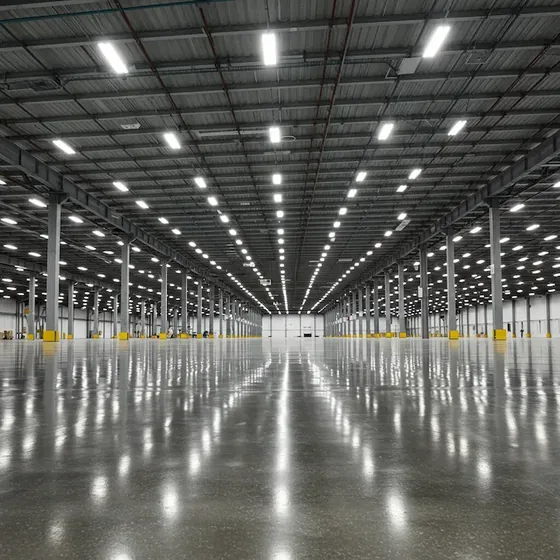
High-build epoxy and urethane systems that take forklift and pallet-jack traffic, resist tire pickup, and hold crisp aisle and safety striping.
Warehouse Facilities →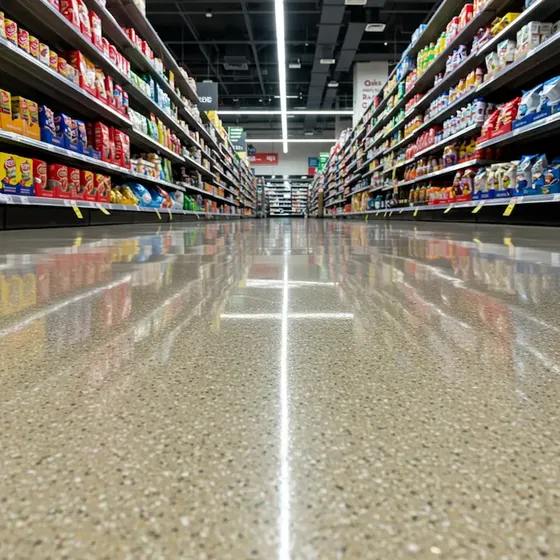
Bright, low-maintenance floors for supermarkets and big-box retail — polished-concrete aesthetics with the durability of a sealed resinous surface.
Concrete Polishing →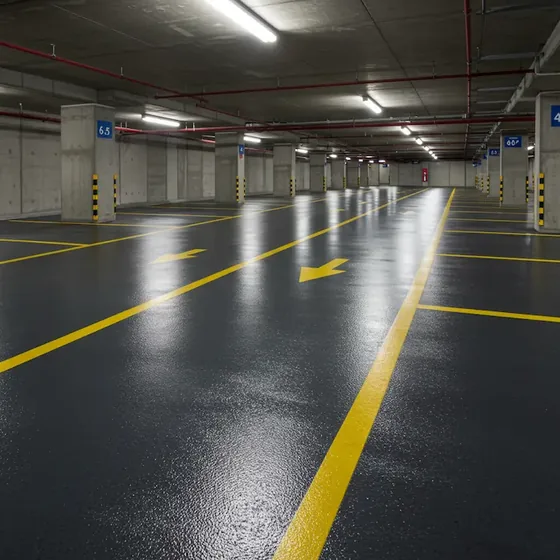
Vehicular traffic membranes and deck coatings that waterproof the structure below and hold up to turning, braking, and tire wear.
Get a Deck Quote →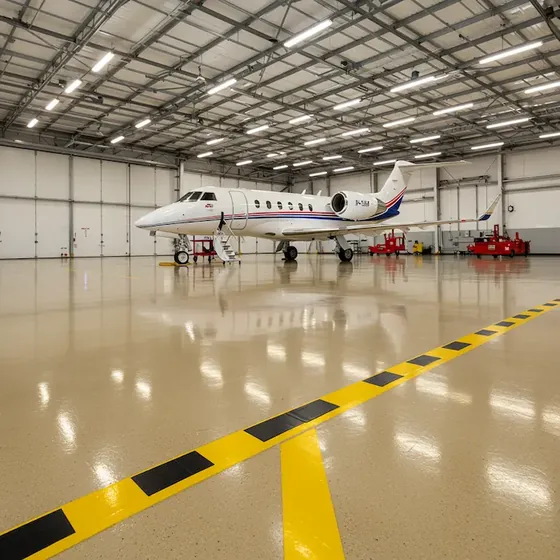
Fuel- and chemical-resistant hangar floors engineered for aircraft loads, tugs, and jack points — bright, sealed, and easy to keep clean.
Get a Hangar Quote →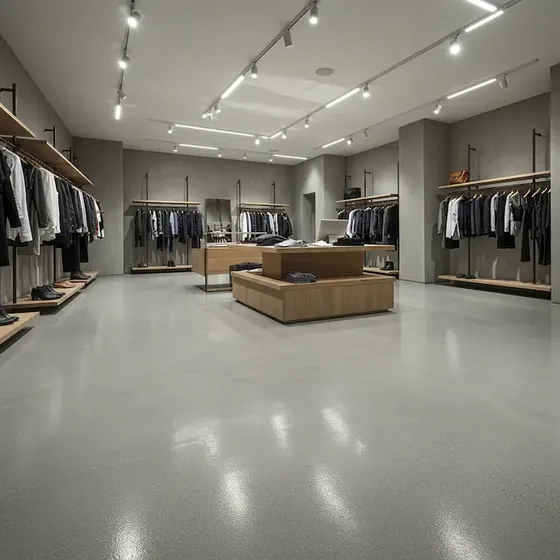
Metallic, flake, and quartz systems for showrooms, storefronts, and lobbies — a floor that looks like a design feature and wears like an industrial coating.
Get a Retail Quote →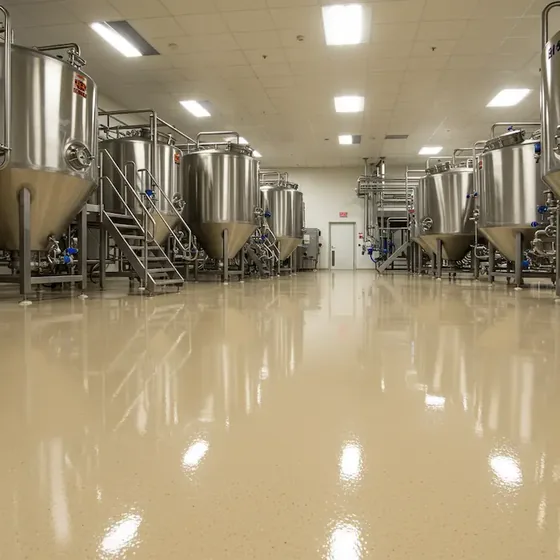
Seamless, sanitary urethane-cement and epoxy with integral cove base and anti-slip aggregate — built for wash-down and USDA/FDA settings. Pairs with commercial kitchen cleaning to keep the floor sanitary once it's in service.
Kitchen Facilities →Seamless epoxy and urethane floors that carry forklifts, racking loads, and constant throughput, with durable aisle and safety-lane striping baked in.
Chemical- and abrasion-resistant systems for plant floors, production lines, and processing rooms — specified for the fluids, loads, and temperatures each area sees.
Sanitary, slip-resistant urethane-cement floors with cove base that hold up to grease, hot spills, and daily wash-down in restaurants and institutional kitchens.
Seamless, cleanable epoxy and ESD systems for clinics, labs, and clean-adjacent spaces where sanitation, static control, and low maintenance matter.
Hot-tire-resistant epoxy and polyaspartic floors for service bays, fleet garages, and repair shops — sealed against oil, coolant, and fuel.
Diamond grinding, shot blasting, moisture testing, crack and joint repair, and slab profiling — the prep that decides how long the finished floor actually lasts.
A resinous floor is a durability decision as much as an appearance decision. Here's what a facility manager gets when the contractor is Southeast.
Phased installs and fast-cure polyaspartic or MMA systems bring bays, aisles, and lines back online on a schedule you can plan production around.
We diamond-grind or shot-blast and moisture-test every slab, then repair cracks and joints — so the coating keys in and stays down.
Multi-million-dollar insured, bonded, and licensed in Georgia, installing named resin systems to the manufacturer's data sheet.
30+ years of Atlanta commercial work — and flooring bundles cleanly with painting, polishing, and repairs under one accountable team.
A repeatable, seven-step process that turns a floor coating from an open-ended risk into a scheduled, documented job you can plan production around.
We walk the floor, check slab condition, and moisture-test the concrete — because vapor drive is the top cause of coating failure.
We diamond-grind or shot-blast the slab to a proper profile, opening the concrete so the resin keys in and bonds instead of sitting on top.
Cracks, spalls, joints, and low spots are repaired and re-profiled so the finished floor is sound and level under the coating.
A primer coat is applied to lock into the prepped concrete and give the build coats a consistent, well-bonded base.
Epoxy or urethane build coats go down, with flake, quartz, or anti-slip aggregate broadcast in for grip and appearance where specified.
A polyaspartic or urethane topcoat seals the system for chemical, UV, and abrasion resistance and the finish your facility needs.
We cure to the system's schedule and hand the area back for foot and full traffic at the return-to-service time we planned with you.
A real floor spec is a document, not a dollar figure. When you compare bids, these are the six things that separate a professional resinous install from a coating rolled on and hoped for.
Before anything goes down, we assess the concrete and test it for moisture vapor. Water driving up through a slab is the single most common cause of coating delamination, and no resin survives it. Measuring it first — and specifying a vapor-mitigating primer when needed — is what keeps the floor bonded rather than bubbling a few months in.
The proposal states how the slab is profiled: diamond grinding for smoother floors, shot blasting for aggressive profiles on industrial concrete. Prep opens the surface so the coating keys into it mechanically. A floor rolled over sealed, unground concrete peels — so this line item, not the resin brand, is where a floor's lifespan is won or lost.
Spalls, cracks, control joints, and low spots are repaired and re-profiled before coating. Skipping this telegraphs every flaw straight through the finished floor and creates edges that chip under traffic. A defined repair scope means the surface under your new floor is actually sound.
We name the resin system, the number and type of coats, the total build thickness, and the topcoat and texture for each area. Naming the system holds us to a defined standard and keeps the manufacturer's warranty intact, because the material is installed exactly the way its data sheet requires — matched to the loads, chemicals, and temperatures that floor takes.
We map the install to your calendar: which areas get coated in what order, what happens off-shift, and exactly when each zone returns to foot and full traffic. When downtime is the constraint, we spec fast-cure polyaspartic or MMA. A phased plan is the difference between a floor that quietly happens around your operation and one that idles a line you needed running.
Chemical resistance, abrasion resistance, thermal-shock tolerance, and slip resistance are all dialed to your environment — not left to a generic finish. A wash-down kitchen, a forklift aisle, and a lab floor need different systems. Matching resin, thickness, and texture to real conditions is what makes the floor perform for years instead of failing at the first hard use.
Most of the floors we coat can't simply shut down for the job — product still moves, lines still run, and staff still report. So we plan the install around your operation rather than through it. We sequence the work area by area, coating and curing one zone to return-to-service before moving to the next, so the parts of the floor you need stay usable throughout.
Our office hours run Monday through Friday, and we phase the work to fit the rhythm of your facility — concentrating the disruptive grinding and coating steps in your lowest-traffic windows and keeping active aisles, exits, and equipment clear. When the schedule is tight, fast-cure polyaspartic and MMA systems return a bay or line to service the same day or overnight, and containment and dust control keep grinding dust and fumes off the operations still running around us.
Every crew follows OSHA practices for containment, ventilation, and jobsite safety, so the install stays safe for your people as well as ours. The goal is simple: you get a floor engineered to last, and your operation barely loses a shift getting it.
From two Atlanta-area offices, Southeast Commercial Services coats commercial and industrial floors throughout Fulton, DeKalb, Gwinnett, Cobb, and Cherokee counties — from Midtown showrooms to Gwinnett distribution centers.
Planning a floor? Tell us the facility type, rough square footage, and your timing, and we'll schedule a walkthrough and return a written scope you can act on.
Working from offices in Atlanta and Decatur, our crews reach commercial and industrial sites across the region's major corridors and surrounding counties.
We follow the metro's freight and industrial arteries — the I-75, I-285, and I-85 corridors — to reach warehouses, plants, and business parks throughout the region. Coverage spans Fulton, Cobb, Gwinnett, DeKalb, and Cherokee counties, from intown showrooms and kitchens to the distribution belts on the perimeter.
If your building sits inside the greater Atlanta area, we can most likely coat it. Not sure whether you're in range? Call (470) 458-2322 and we'll confirm coverage and set a walkthrough.
Every facility type carries its own loads, chemicals, and downtime demands. These are the commercial and industrial floors we're built to handle.
Forklift-rated epoxy and urethane floors with durable aisle and safety striping.
Chemical- and abrasion-resistant systems specified to each production area's loads.
Sanitary urethane-cement with cove base for wash-down and USDA/FDA settings.
Seamless, cleanable epoxy and ESD systems for clinics, labs, and clean spaces.
Hot-tire-resistant floors for service bays and fleet garages, sealed against fluids.
Fuel- and chemical-resistant hangar floors engineered for aircraft and tug loads.
Metallic, flake, and quartz decorative floors that wear like an industrial coating.
Traffic membranes and deck coatings that waterproof the structure below.
A commercial floor is an investment in an asset your operation runs on every shift. We stand behind the install and coat to protect the products that stand behind the finish.
Our labor is warranted against defects in installation — delamination, peeling, or failures that trace back to how the floor was prepped and coated rather than how it's used.
Because we install to the manufacturer's specification, the system carries its own product warranty. Installing to spec — over a properly prepped slab — is exactly what keeps that coverage valid.
We'll tell you honestly what a given system should deliver on your slab, loads, and environment — so your maintenance budget is planned on real service life, not a sales number.
Straight answers to what Atlanta facility managers and plant directors ask before signing a flooring contractor.
Epoxy builds a hard, chemical-resistant base coat and is the workhorse of most commercial floors. Polyaspartic and polyurethane cure fast and resist UV, abrasion, and scuffing, so they make excellent topcoats and quick-turnaround systems. Urethane-cement is the heavy-duty option for wet, hot, and thermal-shock environments like commercial kitchens and food plants. On most projects we combine them — an epoxy build coat under a polyaspartic or urethane wear layer — and match the system to how the floor is actually used.
Commercial epoxy pricing is driven by the system and the slab, not a flat rate — the number moves with the square footage, the resin system specified (a thin epoxy seal versus a high-build urethane-cement floor), the condition of the concrete, how much grinding and crack repair the slab needs, and any downtime or after-hours phasing. A large, sound warehouse slab in a single system costs far less per square foot than a small food-plant floor that needs sanitary urethane-cement, cove base, and moisture mitigation. We measure the floor, spec the system to how it's actually used, and return a written per-square-foot quote you can compare against other bidders line for line.
It depends on what the floor has to do. Polished concrete is the durable, low-maintenance, no-coating option — ideal for showrooms, retail, and warehouse aisles where you want a bright, hard-wearing floor with nothing to delaminate. Epoxy and resinous coatings are the answer when you need chemical resistance, a specific color or safety marking, a seamless sanitary surface for a kitchen or plant, or a bright reflective finish over rougher concrete. Because we do both, we'll recommend the one that fits your loads, chemicals, and budget rather than selling you the one we happen to install.
A properly specified and installed commercial floor is measured in years of hard service, not months — but its real lifespan is decided by two things: surface prep and system match. A floor mechanically ground, moisture-tested, and coated in the right resin for its traffic and chemicals holds up for the long haul; the same product rolled over sealed or damp concrete can fail within a year. We install to the manufacturer's data sheet over a properly prepped slab and tell you honestly what a given system should deliver on your floor, so your maintenance budget is planned on real service life.
It depends on the system. Standard epoxy typically needs foot traffic in about a day and full traffic in several days. When downtime is the constraint, we install fast-cure polyaspartic or MMA systems that can return a bay to service the same day or overnight. We plan the schedule around your operation before we start, so you know exactly when each area comes back online.
Prep is what determines whether a resinous floor bonds for years or peels in months. We mechanically profile the slab with diamond grinding or shot blasting so the coating keys into the concrete, then repair cracks and joints and re-establish a sound surface. We also moisture-test the slab, because vapor coming up through concrete is the most common cause of coating failure. A floor installed over unprepped or damp concrete will not last, no matter how good the product is.
Warehouses and distribution centers, manufacturing and processing plants, commercial kitchens and food-and-beverage facilities, healthcare and lab spaces, auto shops and parking decks, aviation hangars, and retail and showroom floors across metro Atlanta. We work commercial and industrial only — no residential garages.
Yes, when it's specified correctly. High-build epoxy and urethane systems are engineered for abrasion from forklift and pallet-jack traffic, chemical exposure from spills and wash-down, thermal shock from hot processes and cleaning, and impact from dropped loads. We choose the resin, thickness, and topcoat based on the specific loads, chemicals, and temperatures your floor sees — not a one-size finish.
Yes. For commercial kitchens and food-and-beverage facilities we install seamless, sanitary urethane-cement and epoxy systems with integral cove base and anti-slip aggregate, built to hold up to constant wash-down, hot spills, and USDA/FDA sanitary requirements. Anti-slip broadcast and texture can be dialed in to the level your operation and safety program require.
We coat commercial and industrial floors across the metro from our Atlanta and Decatur offices. Explore the facility floors we specialize in by city — more added as we go.
Fuel-, chemical-, and abrasion-resistant novolac, ESD/static-control, and urethane-cement floors for the aerospace and precision-manufacturing corridor along GA-400.
Warehouse and food-grade floors for the I-85 / Peachtree Industrial / Jimmy Carter Blvd freight cluster — high-build epoxy, polyaspartic fast-cure, and sanitary urethane-cement for Gwinnett's distribution and processing base.
Chemical- and fuel-resistant epoxy, novolac, and ESD floors for Cobb County's aerospace & defense manufacturing, advanced-manufacturing, and I-75 distribution corridors.
Warehouse, food-grade, and manufacturing floors for the Mountain Industrial Blvd corridor — plus moisture-mitigation and slab repair built for DeKalb's older industrial concrete.
Large-scale warehouse and cold-storage floors for the I-75 South logistics corridor — high-build epoxy, joint filling, urethane-cement, fast-cure polyaspartic, and DC line striping.
Distribution-center and cold-storage floors at the I-75 / I-675 interchange — high-build epoxy for cross-dock forklift traffic, urethane-cement for refrigerated slabs, fast-cure polyaspartic for occupied fulfillment, joint filling, and DC line striping across the Candler Rd and Hudson Bridge / GA-20 corridors.
Warehouse high-build epoxy and polyaspartic fast-cure floors for the I-75 / I-575 distribution and flex corridor — plus novolac, ESD/static-control, joint filling, and line striping for Cobb County's advanced-manufacturing base.
Warehouse and food-grade floors for the Peachtree Industrial Blvd / I-85 corridor — high-build epoxy, polyaspartic, urethane-cement, and ESD/static-control for Gwinnett's distribution, food-processing, and electronics facilities.
ESD/static-control and novolac floors for the Technology Park tech & R&D core, plus high-build epoxy and polyaspartic fast-cure for the Peachtree Industrial flex-distribution base — Gwinnett's smart-city and advanced-manufacturing corridor.
Warehouse high-build epoxy, polyaspartic fast-cure, sanitary urethane-cement, and moisture-mitigation for the Pleasantdale Rd / DeKalb Technology Pkwy last-mile logistics, food & bev, and studio-support base inside I-285.
Warehouse high-build epoxy and polyaspartic, novolac for chemical zones, and sanitary urethane-cement for the South Cobb Drive / Highlands Pkwy / I-285 distribution and light-manufacturing corridor in southeast Cobb County.
High-build warehouse epoxy, fast-return polyaspartic, chemical-resistant novolac, and joint filling for the GA-316 / Sugarloaf Pkwy distribution and advanced-manufacturing corridor at the Gwinnett County seat.
Tell us the facility type, rough square footage, and your timing. A Southeast Commercial Services team member will follow up to schedule a walkthrough — typically within the hour, Monday–Friday.